
FAP-Targeted Imaging and Therapy: Why SFT Patients Should Pay Attention
What FAPi theranostics could mean for patients with Solitary Fibrous Tumor

If you have been diagnosed with Solitary Fibrous Tumor (SFT), you probably know the usual treatment story.
Surgery when the tumor can be removed. Radiation when local control is needed. Later, if the disease spreads or progresses, a rotation of systemic treatments that were not built specifically for SFT: pazopanib, temozolomide with bevacizumab, an ablation for selected lesions, and other borrowed treatment tools.
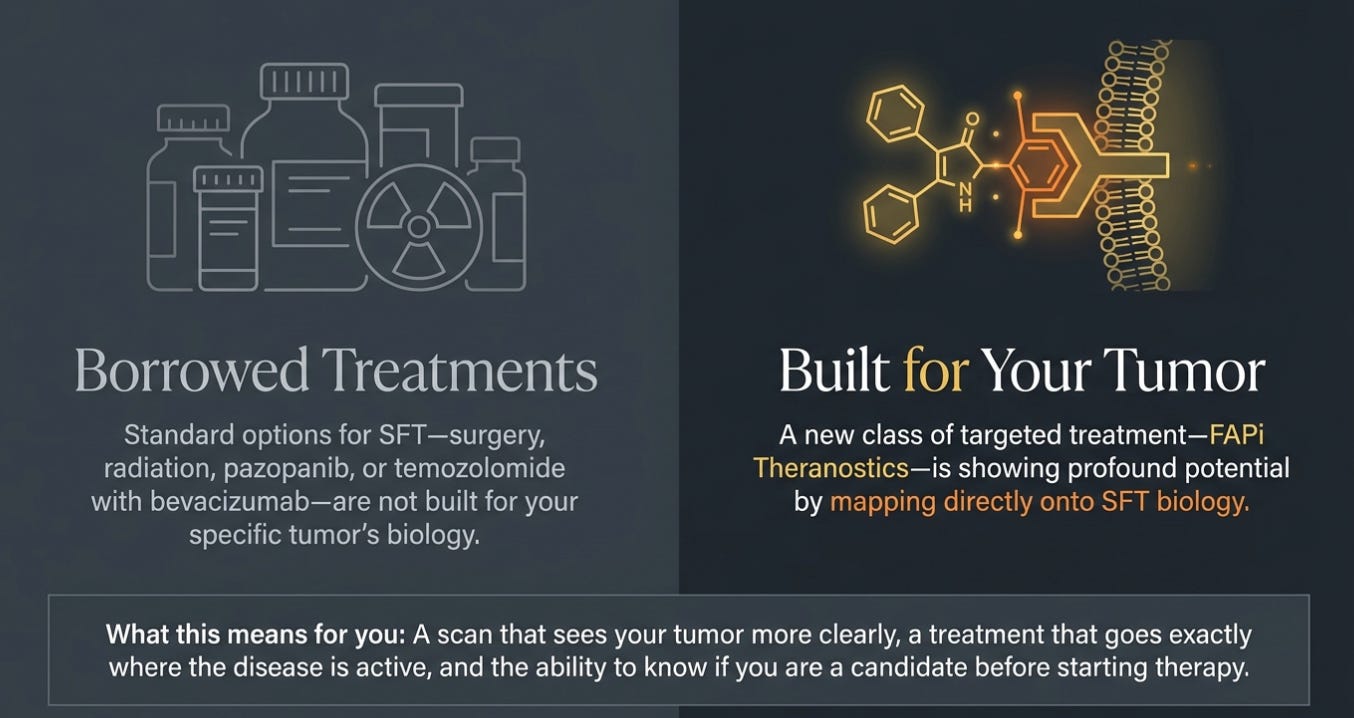
Those treatments can and do matter. Some patients benefit from them. But none of them were designed around the biology that makes SFT different.
That is why FAP-targeted imaging and therapy deserves our attention.
It may offer something SFT patients have rarely had: a way to image a target that appears unusually active in SFT, then use that same target to deliver radiation directly to tumor sites.
The science is still early. This is not a cure claim. It is not a replacement for surgery. It is not available to every patient. But for people with metastatic or progressing SFT, it may be one of the most important treatment pathways to understand right now.
Here is the practical idea:
A scan may show whether your tumor expresses FAP.
If the scan lights up strongly, that may help determine whether a FAP-targeted therapy trial is relevant.
That same target may then be used to deliver radiation directly to tumor sites.
This type of treatment is called theranostics. The biology may be unusually well matched to SFT, even though nobody originally designed it specifically for our disease.
This article explains what FAP is, how theranostics work, what early SFT data has shown, which trials may matter, and what patients can ask their oncologists now.
Who this may matter for right now
FAP treatment is most relevant right now for SFT patients with metastatic, recurrent, or progressing disease, especially patients whose disease is no longer controlled by surgery, radiation, ablation, or the systemic therapies they have tried.
If your oncologist is running out of standard options, FAP imaging may be worth discussing.
A reasonable next step is to ask whether your tumor has been evaluated for FAP expression using a FAP-targeted imaging scan, such as 68Ga-FAPI PET/CT or an equivalent study available through a clinical trial.
This may be less immediately relevant if you are newly diagnosed with resectable disease. At this time, surgery remains the common first step when complete resection is possible.
It may also be less urgent if your disease is stable on a current therapy. If a treatment is working, that matters. FAP-targeted therapy is still experimental and should be considered carefully with an experienced sarcoma team.
But even if you are early in the SFT journey or stable, knowing this pathway exists can change how you plan. If your disease ever progresses beyond observation or standard options, FAP imaging and FAP-targeted trials may become part of the conversation.
What is theranostics?
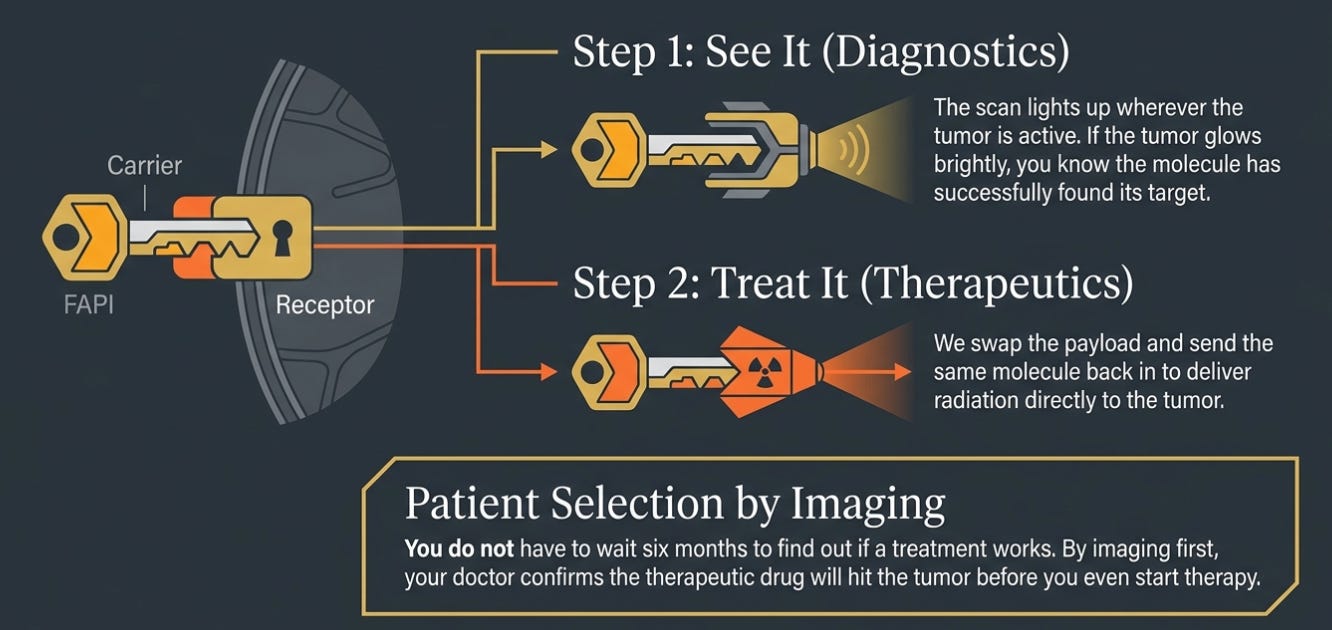
Theranostics combines therapy and diagnostics.
The basic idea is simple: use one version of a molecule to find the target, then use a therapeutic version of a similar molecule to treat the target.
The same carrier. A different payload.
One well-known example comes from neuroendocrine tumors. Doctors can use a PET scan with a diagnostic drug that binds to somatostatin receptors. If the tumors light up strongly in a PET scan, a therapeutic version can then deliver radiation to those same receptor-positive tumor sites.
That is the power of theranostics. Before treating the patient, doctors first ask: does the drug actually go where we need it to go?
If the scan shows strong tumor uptake and acceptable minimal uptake in normal organs, the patient may be a better candidate for therapy. If the scan does not show meaningful tumor uptake, the patient may avoid a treatment that was unlikely to help.
That is a different kind of precision than traditional chemotherapy, where patients may need to wait months to know whether a drug is working.
FAP-targeted theranostics follows the same principle. Different target. Same logic.
Why imaging comes before treatment
Think of radiopharmaceutical therapy as a question of location and time.
If the radioactive compound reaches the tumor and clears quickly from healthy tissue, the tumor receives most of the radiation dose. If it lingers in healthy organs, those organs absorb more radiation.
The engineering challenge is simple to describe and hard to accomplish: make the drug stick to tumor and clear quickly from everything else.
That is why imaging comes first.
Before a patient receives therapeutic radiation, doctors can inject a diagnostic version of the drug. The diagnostic version carries enough radioactivity to show up on a scan, but it is used for imaging rather than treatment.
The scan helps answer several important questions:
Does the drug go to the tumor?
Does it go to normal organs such as kidney, liver, bowel, or bone marrow?
Is the tumor uptake strong enough to justify therapy?
Can dosimetry help estimate how much radiation the tumor and normal tissues might receive?
Patient translation: before exposing a patient to therapeutic radiation, doctors can first ask whether the drug actually reaches the tumor. That is one of the major advantages of this approach.
How is a radiopharmaceutical therapy different from standard radiation therapy? Standard external beam radiation treats from outside the body. The beam passes through tissue on its way to the tumor, and healthy tissue can absorb some dose along the path. Radiopharmaceutical therapy changes the route. The radiation is carried through the bloodstream and delivered at the sites where the drug binds. That is why the side effect profile can look different from what many patients expect when they hear the word radiation.
What FAP is
FAP stands for Fibroblast Activation Protein.
The surprising part is that FAP is usually not the target on the cancer cell itself. It is often found on activated fibroblasts in the tumor microenvironment. Tumors are not just a blob of cancer cells. They also contain blood vessels, immune cells, connective tissue, and a supporting structure around the tumor. This surrounding environment is called the tumor microenvironment. Fibroblasts are connective tissue cells. In a healthy body, they help with wound healing and tissue repair.
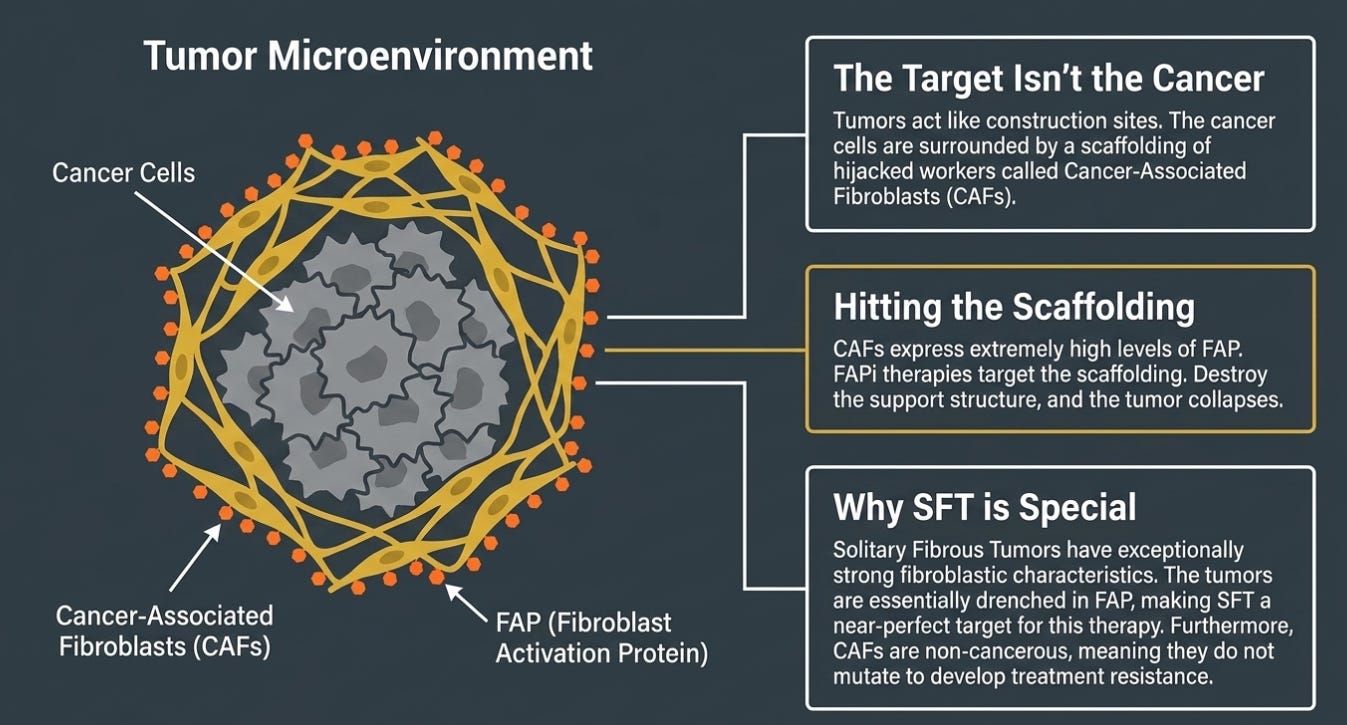
In cancer, some fibroblasts become activated and begin supporting the tumor. These are often called cancer-associated fibroblasts, or CAFs. They can help build the scaffolding around a tumor, remodel the extracellular matrix, provide growth signals, and contribute to immune evasion. Many activated fibroblasts express high levels of FAP.
That matters because a FAP-targeted drug does not necessarily need to bind directly to every cancer cell. If it reaches the FAP-rich support structure around the tumor, the radiation can also damage nearby cancer cells. This is called the crossfire effect.
For SFT, this is especially interesting. SFT is a fibroblastic tumor. Published imaging and treatment reports suggest that FAP expression in SFT can be unusually high compared with many other tumor types.
That does not mean every SFT patient will qualify for FAP-targeted therapy. It means the target is biologically plausible enough that SFT patients and SFT doctors should be paying very close attention.
The scan that may matter for SFT
In many published FAP imaging studies, the diagnostic agent is 68Ga-FAPI-46, used with PET/CT.
Gallium-68 is a radioactive isotope used for PET imaging. The FAPI molecule binds to FAP. The scan then shows where the FAP-targeted molecule accumulates in the body. The brightness on the scan is often measured using SUV, or Standardized Uptake Value. In simple terms, SUV gives physicians a way to estimate how strongly a lesion takes up the imaging agent.
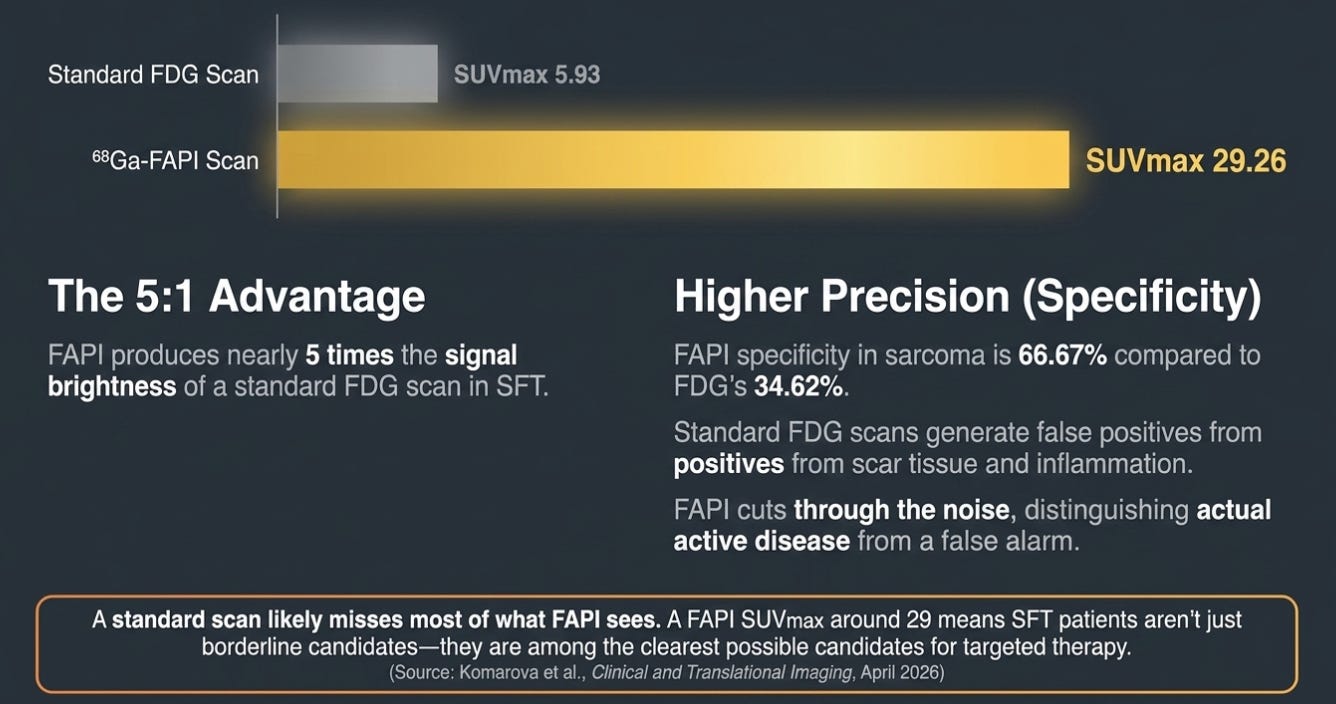
For SFT patients, some of the reported FAP imaging results have been striking.
An April 2026 study by Komarova and colleagues compared 68Ga-FAPI PET/CT with 18F-FDG PET/CT across multiple sarcoma subtypes. In malignant SFT, the reported mean SUVmax was substantially higher with FAPI than with FDG.
That matters because FDG PET is a common cancer imaging tool, but FDG uptake can be variable in SFT. FDG also lights up in inflammation, scar tissue, and post-treatment changes, which can make interpretation difficult.
In that study, FAPI appeared more specific than FDG across the sarcoma cohort. The authors also noted that FAPI was not superior for every sarcoma subtype. Some sarcomas showed higher uptake with FDG.
Patient translation: FAP imaging is not automatically better for every sarcoma. But for SFT, the early data makes FAPI imaging especially worth watching.
The current Perspective Therapeutics clinical trial uses a different imaging approach. Instead of Gallium-68 PET imaging, it uses a Lead-203 imaging agent read on SPECT/CT. The principle is similar: confirm FAP positivity before treating.
The key idea is the same across these approaches. Use imaging first. Treat only if the target is present.
What the early SFT treatment data has shown
The most important published SFT-specific treatment data so far comes from University Hospital Essen and the West German Cancer Center.
In a 2025 Journal of Nuclear Medicine paper, Helena Lanzafame, Kim Magaly Pabst, Pedro Fragoso Costa, Wolfgang Peter Fendler, and colleagues reported outcomes for eleven SFT patients treated with 90Y-FAPI-46.
These were patients with advanced SFT who had limited remaining treatment options. Across the cohort, patients received thirty-four total treatment cycles, with a median of three cycles per patient. Nine of eleven patients achieved disease control. That means their disease did not progress during the reported evaluation period. Three patients showed near-complete metabolic response. One patient had complete resolution of previously reported symptoms. The reported side effect profile was “manageable” across the cohort.
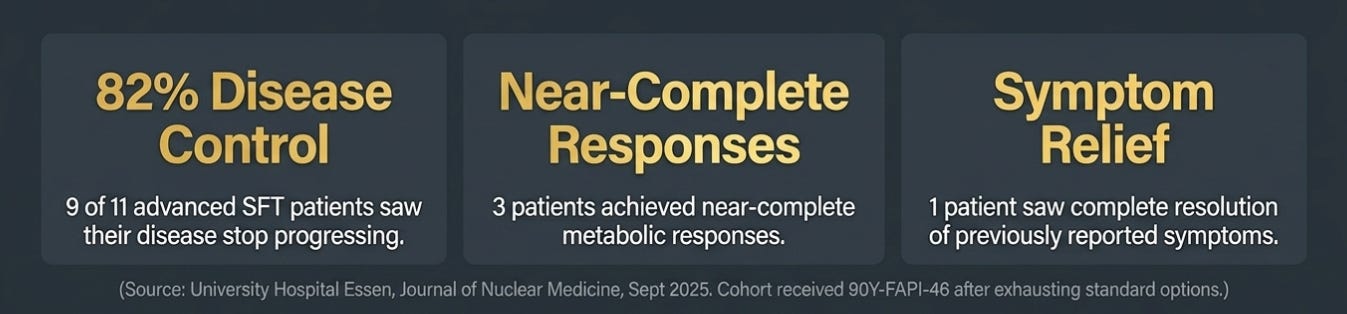
This is not a large randomized trial. It is early evidence from a small group of patients. It does not prove that FAP-targeted therapy will work for all SFT patients. But for a disease with no FDA-approved systemic therapy designed specifically for SFT, an 82% disease control rate in heavily pretreated patients deserves serious attention and further clinical trials.
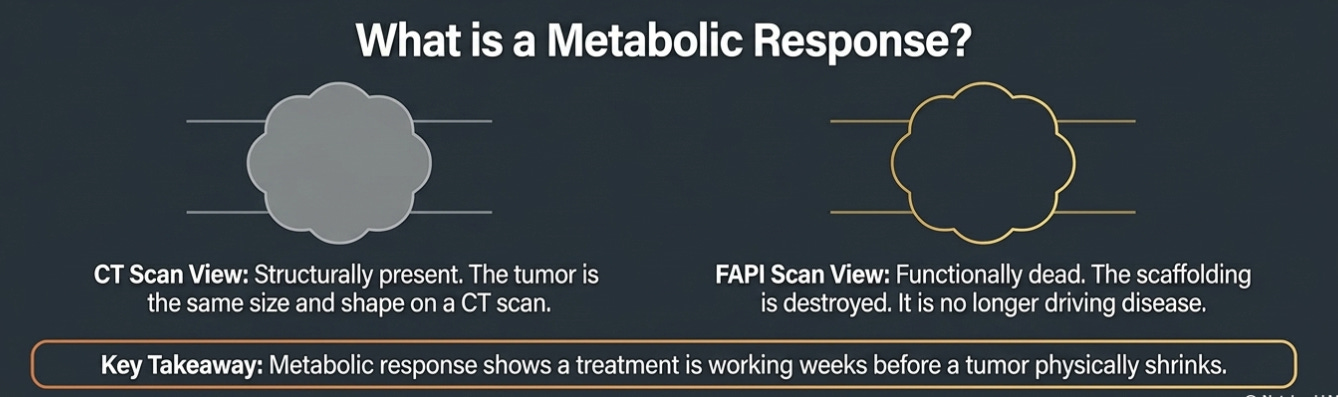
A note on metabolic response: a tumor may look similar in size on CT but show much less activity on a FAP imaging scan. That can suggest that the targeted biology is being affected before the tumor physically shrinks.
Patient translation: the tumor may still be visible on CT, but it may no longer be biologically active in the same way by that imaging measure.
That distinction matters because metabolic response can sometimes appear earlier than size change.
Two types of radiation: beta emitters and alpha emitters
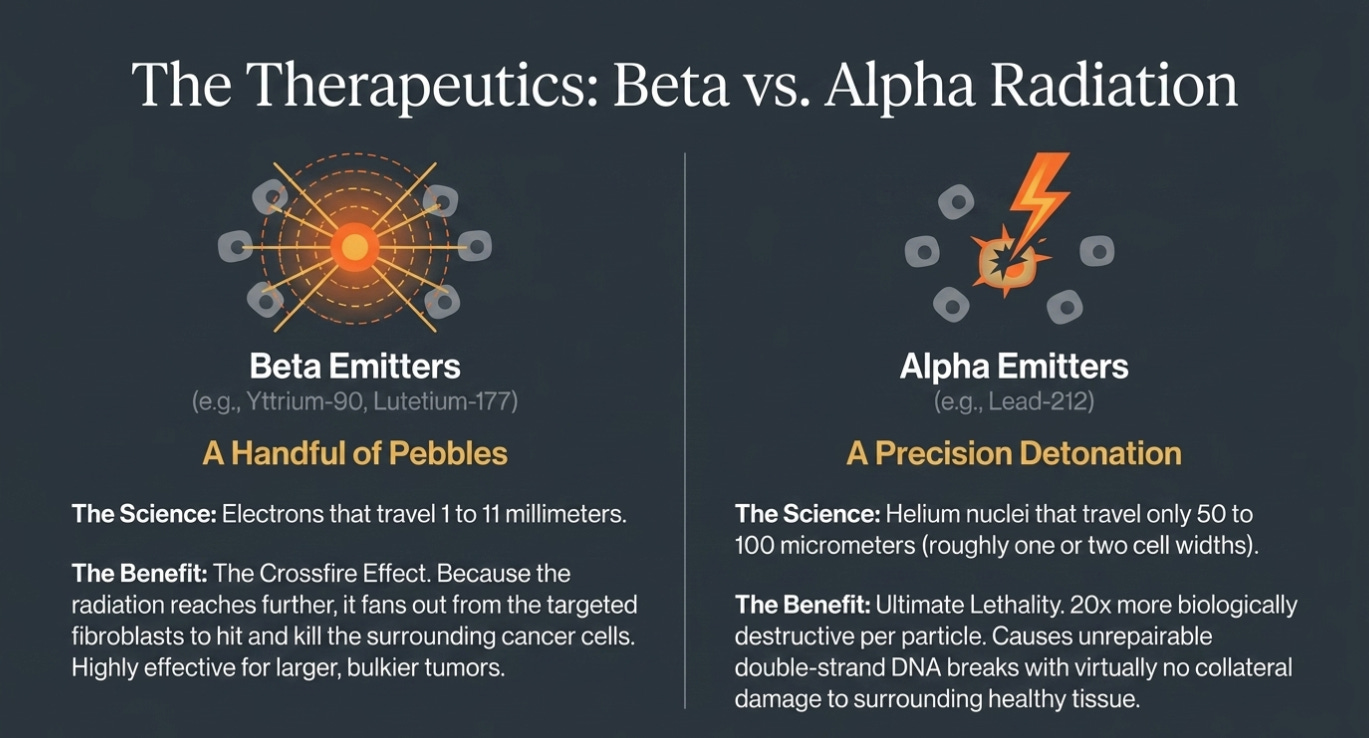
FAP-targeted therapy can use different types of radioactive payloads.
The published Essen SFT treatment data used a beta emitter: Yttrium-90, also written as 90Y.
Beta particles travel several millimeters through tissue, depending on the isotope. That range can be useful when the target is in the tumor microenvironment rather than on every cancer cell. The radiation can spread from the FAP-positive fibroblasts and damage nearby tumor cells. That is the crossfire effect.
Beta emitters may be especially useful for larger or bulkier tumors because the radiation travels far enough to affect surrounding cells.
Alpha emitters behave differently. Alpha particles travel only a very short distance in tissue, roughly one or two cell diameters. But over that short distance, they deliver highly concentrated damage.
The tradeoff is straightforward: Beta emitters travel farther and may have more crossfire effect. Alpha emitters travel a shorter distance but deliver more intense damage to the cells they reach.
Perspective Therapeutics is testing a FAP-targeted alpha therapy using Lead-212, also written as 212Pb. Lead-212 is interesting because it decays into Bismuth-212, which releases the alpha particle. Perspective has designed its drug to carry the radioactive payload to FAP-positive tumor sites while clearing quickly from circulation. That fast clearance matters. A radioactive drug sitting in the bloodstream can expose healthy tissues to radiation. The goal is to reach the tumor, clear from the rest of the body, and limit off-target exposure. To my knowledge, the alpha therapy approach has not yet produced SFT-specific outcome data. That is part of why the Perspective trial is important.
FAP Clinical Trials SFT patients may want to know about
As of this first draft, several clinical trials may be relevant to SFT patients. Trial status changes, so patients and physicians should verify details directly on ClinicalTrials.gov and with the study sites.
NCT06710756 — Perspective Therapeutics 212Pb-PSV359 alpha therapy
This is the most immediately actionable treatment trial for SFT patients in the United States.
Perspective Therapeutics is running a Phase 1/2a study of 212Pb-PSV359, a Lead-212 alpha-particle FAP-targeted therapy.
The trial is open to patients with FAP-positive solid tumors, including sarcoma. The key eligibility requirement is a positive FAP imaging scan showing uptake in at least one known lesion.
As of this draft, listed or expected sites include Saint Louis University, Nebraska Cancer Specialists in Omaha, UPMC in Pittsburgh, and soon, Sylvester Comprehensive Cancer Center in Miami.
Sylvester is especially important to watch because it has a dedicated SFT program. If activated as a trial site, the combination of SFT expertise and access to a FAP-targeted alpha therapy study could be significant for the SFT community.
To check current site status and contact information, search ClinicalTrials.gov for NCT06710756.
NCT07118176 — 68Ga-FAPI-46 imaging study at UCLA
This is an imaging study, not a treatment trial.
The study is being conducted at UCLA’s Jonsson Comprehensive Cancer Center and is led by Dr. Jeremie Calais.
It evaluates how 68Ga-FAPI-46 distributes across tumor types, including SFT. This type of bio-distribution data can help future therapeutic trial design by showing how strongly tumors take up the FAP-targeted imaging agent compared with normal tissues.
To check current status, search ClinicalTrials.gov for NCT07118176.
Other FAP-targeted trials
Additional FAP-targeted radioligand therapy trials have been referenced in recent reviews and may open or expand over time. Patients should periodically search ClinicalTrials.gov for terms such as “FAP,” “FAPI,” “fibroblast activation protein,” “sarcoma,” and “solitary fibrous tumor.”
Why this research is moving now
Traditional drug development rarely favors ultra-rare tumors like SFT. The patient population is too small to attract the same level of investment seen in common cancers. That economic reality is one reason rare tumor patients often depend on treatments developed for broader cancer categories.
FAP theranostics may sidestep part of that problem.
FAP is being studied in common cancers, including pancreatic, breast, lung, colon, and other solid tumors. That means the platform is being funded and developed at a scale that SFT alone could never support. SFT patients may benefit because SFT appears to be one of the tumor types with especially strong FAP uptake.
That is the rare-tumor opportunity here: a target being developed for broader oncology may turn out to be unusually relevant for SFT.
The academic research establishing SFT-specific FAP imaging and treatment data is largely coming from the West German Cancer Center at University Hospital Essen, in collaboration with German research partners.
On the US commercial side, Perspective Therapeutics is the company closest to SFT patients right now because of its Lead-212 FAP-targeted therapy trial.
Broader FAP theranostics development includes multiple companies and academic groups globally. This field is moving because the target is relevant beyond one rare tumor.
What this does not mean
This does not mean FAP therapy is proven for all SFT patients.
This does not mean every SFT tumor will express enough FAP to qualify for treatment.
This does not mean patients should leave a treatment that is currently working.
This does not mean FAP imaging is easy to access or covered by insurance.
This does not mean the early data removes the need for larger clinical trials.
What it does mean is that SFT patients now have a rational target to ask about, early clinical evidence worth tracking, and trials that may be relevant for patients with progressing or metastatic disease.
For a disease where many systemic treatment options have been borrowed from other cancers, that is meaningful.
Summary of Why this matters for SFT patients
SFT patients have waited a long time for a treatment strategy that fits the biology of the disease.
FAP-targeted imaging and therapy is still early. There are unanswered questions about durability of response, patient selection, toxicity, repeat dosing, sequencing with other therapies, and whether alpha therapy will perform differently from beta therapy in SFT.
But the logic is unusually coherent:
SFT is a fibroblastic tumor.
FAP expression appears high in many reported SFT cases.
FAP imaging can help identify whether the target is present.
FAP-targeted therapy can use that same target to deliver radiation.
Early beta-emitter treatment data in SFT showed disease control in most treated patients.
A US alpha-emitter trial is now becoming relevant to sarcoma patients, including SFT patients with FAP-positive disease. This is still early research. It requires caution by all involved. It requires expert medical guidance. It requires much more data.
But it also deserves attention from every major SFT sarcoma center, every SFT researcher, and every patient advocate trying to build a better future for this disease.
What patients can ask their oncologist
A reasonable next step is not to call every trial site immediately.
A better first step is to ask your treating sarcoma oncologist whether FAP imaging is appropriate in your case and whether your disease status could make you eligible for a FAP-targeted trial.
If your oncologist is not familiar with FAP theranostics, ask whether they can consult nuclear medicine or refer you to a sarcoma center participating in one of these studies.
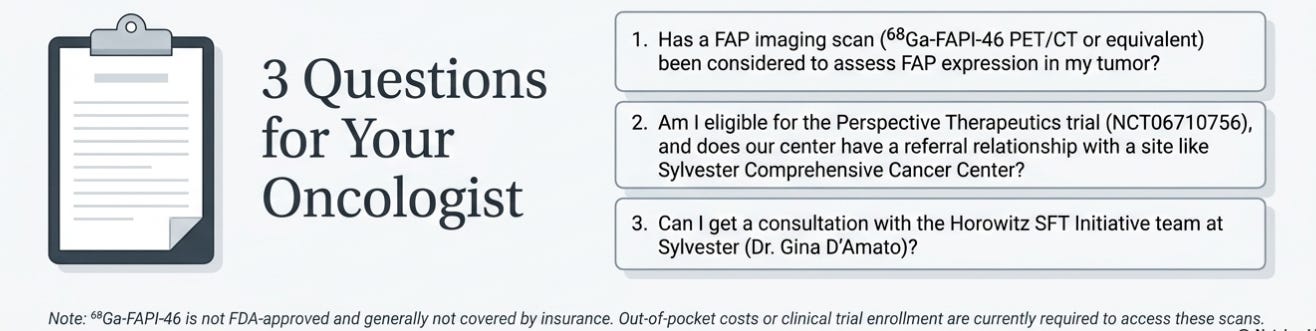
Here are specific questions to ask:
Has a FAP imaging scan, such as 68Ga-FAPI PET/CT or an equivalent FAP-targeted scan, been done or considered in my case?
Does my disease status make me a possible candidate for a FAP-targeted clinical trial?
Am I potentially eligible for the Perspective Therapeutics trial NCT06710756?
Does this center have experience with radioligand therapy or access to a nuclear medicine team that does?
If FAP imaging is not available here, is there a referral pathway to a center where it is available through a study?
Would FAP imaging provide useful information even if I am not ready for treatment right now?
What are the access, cost, and insurance limitations for FAP imaging?
One practical warning: 68Ga-FAPI-46 is not FDA-approved and may not be covered by insurance. Some patients may only be able to access FAP imaging through a clinical trial, expanded research program, or out-of-pocket payment.
Sources
FAP-Directed Imaging and Therapy of Solitary Fibrous Tumor | Journal of Nuclear Medicine (2024)
Safety and efficacy of 177Lu-FAPI-XT radioligand therapy, first-in-human study | PMC (2026)
NCT06710756 -- Perspective Therapeutics 212Pb-PSV359 Alpha Therapy | ClinicalTrials.gov
NCT07118176 -- 68Ga-FAPI-46 Imaging Study at UCLA | ClinicalTrials.gov
The Horowitz Solitary Fibrous Tumor Initiative | Sylvester Comprehensive Cancer Center
Medical disclaimer
This article is based on my opinion, published peer-reviewed research, and publicly registered clinical trials. It is intended for patient education and advocacy. It is not medical advice. Patients should verify clinical trial status, imaging availability, eligibility, risks, and costs directly with their treating physicians and the listed institutions before making treatment decisions.
Thanks for a great article Steve!
This is so useful! Thank you for sharing.